NIRVANA SHATAKAM By ADI SANKARACHARYA
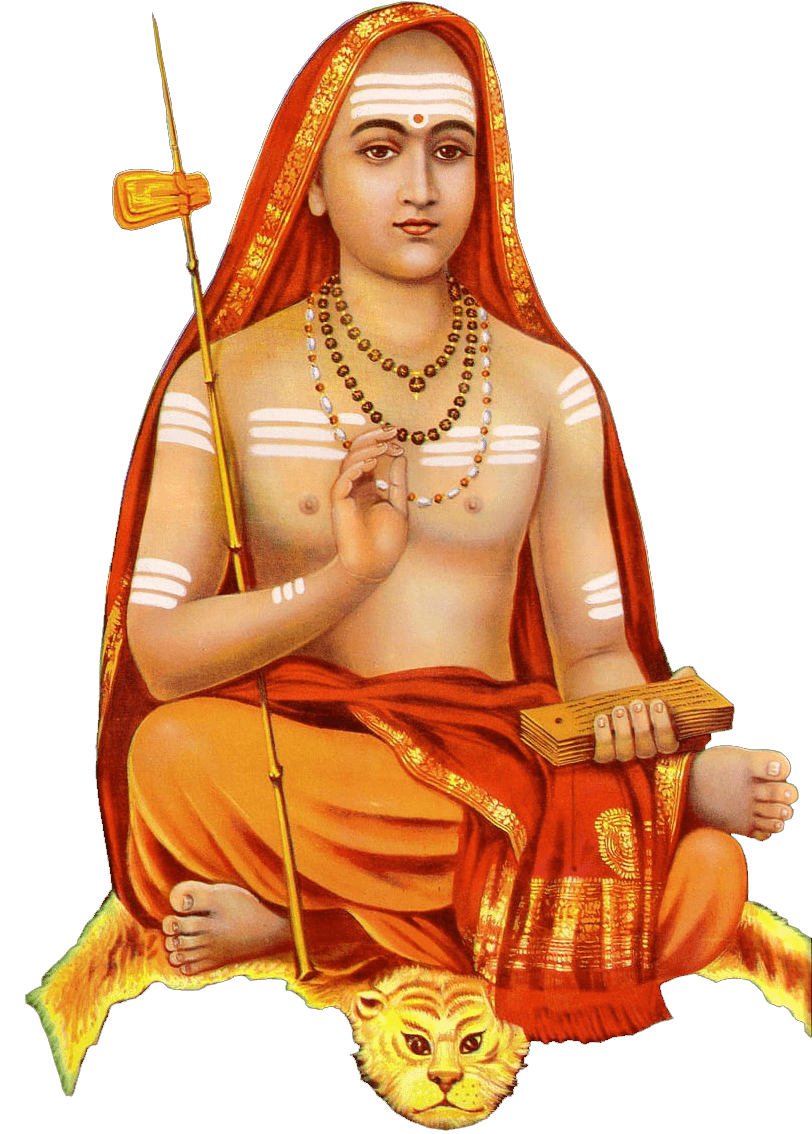
Adi Shankaracharya (an 8th-century Hindu philosopher and mystic praised as God in Hinduism) is the most influential practitioner of Advaita Vedanta. Advaita Vedanta is based on the teachings of the Upanishads, the ancient scriptures that form the end part of the Vedas, the oldest sacred texts of Hinduism. It also follows the Brahma Sutras, a systematic summary of the Upanishadic philosophy, and the Bhagavad Gita, a sacred dialogue between Lord Krishna and Arjuna on the battlefield of Kurukshetra.
Adi Shankaracharya argued that Brahman is without qualities (Nirguna) and beyond all categories of thought and language. He used various methods of reasoning and scriptural interpretation to show that the apparent diversity and multiplicity of the world is due to ignorance (Avidya) of the true nature of Brahman. He also taught that one can attain knowledge of Brahman through discrimination (Viveka) between the real and the unreal, renunciation (Vairagya) of worldly attachments, and meditation (Nididhyasana) on the sacred utterances (Mahavakyas) that reveal the identity of Atman and Brahman.
There are numerous priceless compositions by Adi Shankaracharya which are categorized into three categories. His commentaries (Bhashya) on the Upanishads, Brahmasutra, and Bhagavadgita fall within the first category. The second group consists of independent writings, or prakarana granthas, that concisely explain the main ideas of the Upanishads. The length of these ranges from a single verse to a thousand verses. The final group includes devotional hymns.
The Nirvana Shatakam also known as Atma Shatakam belongs to prakarana category of Adi Shankaracharya consisting only six verses. Nirvana Shatakam clearly state that identification of self with the body, mind, and senses is the source of all suffering. It should be abandoned in order to recognize one's true identity, which is none other than the highest Brahman. Liberation is the result of this insight. Adi Shankaracharyacharya disproves each of our common identifications one by one while continually repeating, "chidananda roopa shivoham shivoham."
The following is the Nirvana Shatakam in original Sanskrit with its English translation, explanation, and pronunciation:
न च श्रोत्रजिह्वे न च घ्राणनेत्रे ।
न च व्योम भूमिर्न तेजो न वायुः
चिदानन्दरूपः शिवोऽहम् शिवोऽहम् ॥१॥
na ca śrotrajihve na ca ghrāṇanetre .
na ca vyoma bhūmirna tejo na vāyuḥ
cidānandarūpaḥ śivo’ham śivo’ham ||1||
Translation:
I am not the mind, nor the intellect, nor the ego-sense, nor the store-house of memories.
I am not the ear, nor the tongue, nor the nose, nor the eyes.
Nor am I the sky (space), or the earth, or fire, or air.
I am the supreme auspiciousness of the nature of consciousness-bliss. I am (Shiva) the auspiciousness.
न वा सप्तधातुः न वा पञ्चकोशः ।
न वाक्पाणिपादं न चोपस्थपायु
चिदानन्दरूपः शिवोऽहम् शिवोऽहम् ॥२॥
na vā saptadhātuḥ na vā pañcakośaḥ .
na vākpāṇipādaṃ na copasthapāyu
cidānandarūpaḥ śivo’ham śivo’ham ||2||
Translation:
I am not what is known as the life-breath, nor am I the five vital airs.
I am not the seven ‘dhatus’ or constituents of the body. I am not the five sheaths.
I am not speech, nor the hands, nor the feet. I am not the genital organ, nor the organ of excretion.
I am the supreme auspiciousness of the nature of consciousness-bliss. I am (Shiva) the auspiciousness.
मदो नैव मे नैव मात्सर्यभावः ।
न धर्मो न चार्थो न कामो न मोक्षः
चिदानन्दरूपः शिवोऽहम् शिवोऽहम् ॥३॥
mado naiva me naiva mātsaryabhāvaḥ .
na dharmo na cārtho na kāmo na mokṣaḥ
cidānandarūpaḥ śivo’ham śivo’ham ||3||
Translation:
I do not have any aversion or attachment,
nor do I have greed, delusion, pride, or jealousy.
I do not hanker after Dharma, wealth, pleasures, or liberation (the four purushaarthas).
I am the supreme auspiciousness of the nature of consciousness-bliss. I am (Shiva) the auspiciousness.
न मन्त्रो न तीर्थं न वेदा न यज्ञाः ।
अहं भोजनं नैव भोज्यं न भोक्ता
चिदानन्दरूपः शिवोऽहम् शिवोऽहम् ॥४॥
na mantro na tīrthaṃ na vedā na yajñāḥ .
ahaṃ bhojanaṃ naiva bhojyaṃ na bhoktā
cidānandarūpaḥ śivo’ham śivo’ham ||4||
Translation:
There is no such thing as merit or sin for me. Nor is there joy or sorrow.
I have no need for mantras, or pilgrimage, or Vedas, or sacrifices.
I am neither the enjoyed nor the enjoyer, nor enjoyment.
I am the supreme auspiciousness of the nature of consciousness-bliss. I am (Shiva) the auspiciousness.
पिता नैव मे नैव माता न जन्मः ।
न बन्धुर्न मित्रं गुरुर्नैव शिष्यं
चिदानन्दरूपः शिवोऽहम् शिवोऽहम् ॥५॥
pitā naiva me naiva mātā na janmaḥ .
na bandhurna mitraṃ gururnaiva śiṣyaṃ
cidānandarūpaḥ śivo’ham śivo’ham ||5||
Translation:
I have no possibility of death, nor distinction of caste.
I have no father, nor mother. I have no birth.
I have no relations, nor friend, nor guru, nor disciple.
I am the supreme auspiciousness of the nature of consciousness-bliss. I am (Shiva) the auspiciousness.
विभुत्वाच्च सर्वत्र सर्वेन्द्रियाणाम् ।
न चासङ्गतं नैव मुक्तिर्न मेयः
चिदानन्दरूपः शिवोऽहम् शिवोऽहम् ॥६॥
vibhutvācca sarvatra sarvendriyāṇām .
na cāsaṅgataṃ naiva muktirna meyaḥ
cidānandarūpaḥ śivo’ham śivo’ham ||6||
Translation:
I am unconditioned (and so free from all attributes). I am formless.
I am all-pervading. I am beyond the organs.
I am ever the same. There is neither bondage nor liberation for me.
I am the supreme auspiciousness of the nature of consciousness-bliss. I am (Shiva) the auspiciousness.
Explanation of verses
Analysis of Verses 1 & 2:
In the first and second verses, Adi Shankaracharya proclaims that Atman differs from the gross/Stula, subtle/Sukshma, and the casual body/Karana sharira of a Jiva.
मनो बुद्ध्यहंकारचित्तानि नाहम्- I am not the mind, intellect, ego and the faculty of recollection.
अहम्-here represents the Atman, the one True Self. मनः-manas/mind, बुद्धि-buddhi/intellect, अहंकार- ahamkara/Ego and चित्त-chitta/faculty of recollection are the four-fold aspects of Antah-Karana (Totality of Mind). Manas is the lower mind that thinks about/discriminates between the pros and cons of a thing and is always indecisive. Buddhi- is the higher mind that determines the true nature of an object and makes decisions. Ahamakara is that which identifies itself with the body as itself. Chitta- contemplates/indulges in things of interest/attraction or the faculty of memorizing and recollecting things. This has been explained by Sri Sankara in Vivekachudamani in slokas 95 and 96 as below:
"The one antahkarana or inner organ is known by four different names, manas, buddhi, ahankara and chittam according to the different functions. When the mind cogitates it is called manas. When it comes to a decision it is called buddhi. When it stores memories, it is called chittam. When it identifies itself with each of these functions it is known as ahankara."
The manner in which these functions take place can be explained by taking an illustration. I am walking along the road and I see at a distance a person whose gait seems to resemble that of a certain friend of mine, named Ram. I begin to debate whether the person I see at a distance is Ram or not. This function of debating is what is called ‘manas’. When he comes nearer and I am able to see his face clearly, I compare it with the memory of the face of Ram stored in my mind. This memory is ‘chittam’. If I find that the two tally, I decide that he is Ram and I greet him. This function of deciding is called ‘buddhi’. The performer of all these three functions is ‘I’, which is known as ‘ahankara’. The term ‘manas’ is also generally used to denote all these four collectively, when these distinctions are not intended.
So, the verse is saying that Atman is not the Antahkarana. Atman is neither the mind, intellect, ego, nor chitta. Atman is different from all these.
न च श्रोत्र जिह्वे न च घ्राण नेत्रे- Neither am I the faculty of hearing, nor of taste, nor smell nor sight.
श्रोत्र-Faculty of hearing, जिह्वे-faculty of taste, घ्राण नेत्रे-faculty of smell and sight. These four faculties and the faculty of touch form the Pancha Jnanendriyas/the five faculties of perception. त्वक्-faculty of touch/feeling though not mentioned in verse explicitly, it is implicitly included as the other four Jnanendriyas are mentioned. So, the verse is saying that Atman is different from the Pancha-Jnanendriyas.
न च व्योम भूमिर् न तेजॊ न वायु:- I am not the space, nor the earth, nor light/fire nor the air. व्योम-Space, भूमिर्-Earth, तेजॊ-Light/Fire and वायु-Air. These four, along with अपः-water, constitute the Pancha Mahabhutas-the Five great elements. The water element is implicit in the verse. From the Sattvic and Rajasic portions of these elements are formed the Sukshma Sharira/ Subtle body of a Jiva. From the Tamasic portions of these elements, after they undergo a process of Panchikarana/ Quantuplication[1], the Stula Sharira/Gross body of a Jiva is formed. So, the verse says that Atman is different from these great elements, the Pancha MahaBhutas, from which the Gross and the Subtle bodies are formed.
न च प्राण संज्ञो- I am not that which is called as Prana (i.e. Mula Prakriti). संज्ञो-is a noun; it is a designation. Hence, प्राण संज्ञो means “that which is called as Prana”. What is it that is referred to as “Prana”? It is the Mula-Prakriti or Maya[2]. Hence, by saying that Atman is different from Mula-Prakriti, it is saying that Atman is distinct from the Karana Sharira/Casual body. Mula Prakriti, which is the cause of this entire universe, is called Maha-Karana- the great cause. In the context of a Jiva, Atman is devoid of even the Casual body/Karana Sharira.
न वै पञ्चवायु:- I am not even the five vital airs. पञ्चवायु-Five vital airs are Prana, Apana, Vyana, Udana and Samana. Prana causes respiration, Apana is the force that causes excretion, Vyana causes circulation, Udana is the force that, at death, carries the Subtle body out of the Physical body, and Samana causes digestion and assimilation. The verse is saying that Atman is different from these Pancha-Vayus.
In short, Adi Shankaracharya is saying that Atman is different from the Subtle body/Sukshma Sharira that consists of the Antahkarana, Jnanendriya, Karmendriyas, and the Pancha-Vayus.
न वा सप्तधातुर्- I am not even the Seven-fold material. सप्तधातु:- represents the seven types of materials that make up the gross body/Stula Sharira. They are Rasa/lymph or plasma, Rakta/blood, Mamsa/flesh, Meda/fat, Asthi/Bone, Majja/Marrow, and Sukra/Semen. These seven Dhatus comprise the Gross body/Stula Sharira of a Jiva. Here, Adi Shankaracharya says that Atman is different from the Gross Body.
न वा पञ्चकोश:- I am not even the five sheaths. पञ्चकोश:- The five sheaths are the five layers of bondage and Ignorance that bound a Jiva. The five sheaths are- Annamaya Kosha, Pranamaya Kosha, Manomaya Kosha, Vigyanamaya Kosha, and Anandamaya Kosha.
Annamaya Kosha is the limitation placed on an individual in the form of gross existence/gross body. Anna denotes gross matter in general and food in particular. Hence, a Jiva in a gross body/Stula Sharira is ever dependent on gross external food for survival and is limited by the gross Universe. He is always subjected to birth, death, ill health, disabilities, etc.
Pranamaya Kosha is made up of Pancha Vayus and the Karmendriyas. The Manomaya Kosha is made up of Manas and the Jnanendriyas. The Vigyanamaya Kosha is made up of Buddhi and the Jnanendriyas. These together represent the Subtle body/Sukshma Sharira. And a Jiva in the Pranamaya or Manomaya Kosha is subjected to limitations placed by subtle existence like fear, sorrow, illness, limited powers, etc. But a Jiva in Vigyanamaya Kosha though free from limitations of gross and subtle existence like hot and cold, sorrow and fear, etc., his attachment to his subtle existence still limits him in the sense that he cannot transcend it.
Anandamaya Kosha represents Mula-Prakriti or the Karana Sharira, the storehouse of all Karmas. Even here, an Individual is limited by his Karana Sharira/casual body. Hence, the verse says that Atman is different from and devoid of these five sheaths that cause bondage.
न वाक्पाणिपादौ न चोपस्थपायू- Neither am I the faculty of speech, nor of grasping nor movement nor procreation nor excretion. वाक्पाणिपादौ- Faculties of speech, of grasping (hands), of movement (feet). उपस्थ- faculty of procreation (genitals), पायू- faculty of excretion (anus). These five together form the Pancha Karmendriyas- the faculties of action. The verse is saying that Atman is different from these faculties of action.
If Atman is neither the 3 bodies nor the 5 sheaths, what is Atman? Adi Shankaracharya answers this thus.
चिदानन्द रूप: शिवोऽहम् शिवॊऽहम्- I am the Auspiciousness (Shiva), which is the very nature of Consiousness and Bliss. शिवोऽहम्- Atman is being defined as शिव- Auspiciousness. Why is the Atman called Auspiciousness? What does it mean? It means that Atman is Pure-Shuddham, devoid of any impurity. The worldly objects are called “Ashuddham”-impure. Here, impurity or “Ashuddhi” refers to the property of an object to cause a feeling of good, bad, or disgust towards it. The objects of the Universe, as they can cause a feeling of happiness when attained, sorrow when unable to attain, and disgust when one does not like it, is called “Ashuddha”. On the other hand, “Atman” is “Shuddha/pure”, free from impurities and any dualities. It causes neither a sense of pleasure nor pain or disgust. Instead, everyone feels drawn towards it. Atman is “Ananda Svaroopa”- the very nature of supreme bliss. Further, it is” Chit-Svaroopa”, the very nature of Knowledge. Hence, Atman is called “Shiva”- pure and auspicious, which is of the nature of Knowledge and Bliss.
Summary of Verses 1 & 2:
The whole Sristi/Jagat/Cosmos can be divided into two categories- The Karana Brahman/Unmanifested source, also called as Mula-Prakriti and the Karya Brahman/the Manifested Cosmos. Now, this Karya Brahman or Manifested Cosmos consists of subtle universes and gross Universes. Hence, we have three states of existence-the Gross Existence, Subtle Existence, and the Unmanifested state. A Jiva exists and experiences the Gross Universe through his Gross Body-Stula Sharira. Similarly, he experiences the Subtle Universe through his subtle body-Sukshma Sharira. In the Mula Prakriti, he exists in an Unmanifested state. Karana Sharira/Casual Body is the storehouse of his Karmas and causes the manifestation of subtle and gross bodies.
The Gross Body comprises blood, flesh, bone, marrow, plasma, semen, and fat called Sapta-Dhatu. A Jiva experiences the Gross Universe in the Waking state/Jagrata avasta. The Subtle body comprises Antahkarana, faculties of action and perception, and the five vital airs. In a Svapna avasta/Dreaming state, a Jiva will experience the subtle worlds through his Mind and subtle body. In a Deep Sleep/Sushupti avasta, in which a Jiva does not remember anything on waking except that he had a nice sleep, in such a state, a Jiva is experiencing his Casual body, the unmanifested state. The gross, subtle, and casual existences together form the Jagat. The five sheaths are nothing, but five layers of limitations superimposed on Atman because of Atman’s Self-Identification with the three bodies.
Hence, in the first two verses, Atman is shown as distinct from a Jivas gross, subtle, and causal body. Due to Avidya/Ignorance, a Jiva Self-Identifies himself with a gross, subtle, and causal body and thinks that (i.e., the bodies) to be True Self/Atman. Hence, he becomes engulfed by the five sheaths that limit his existence. But, in reality, Atman lacks all three bodies and all limitations. By his power of Maya, Atman manifests this Universe by covering itself with five sheaths of limitations and Self-Identifying with the three bodies-casual, subtle, and gross. Hence, a Jiva who wishes to attain Moksha must investigate the nature of Atman/his True Self and understand that Atman is different from and is devoid of all limitations, all bodies, and sheaths. Atman is devoid of any Movement. It is of the very nature of Knowledge and Bliss, and it manifests this entire universe not through Real creation or transformation but only as an appearance or imagination through the power of Maya.
Analysis of Verse 3:
After explaining that Atman lacks any bodies or sheaths, Adi Shankaracharya now explains the state of Jnani, who has realized Atman.
न मे द्वेष रागौ न मे लोभ मोहौ मदो नैव मे नैव मात्सर्यभाव:- Neither have I hatred nor desire (for anything), neither have I greed nor delusion, nor pride and nor even the feelings of jealousy. Lust, hatred, delusion, pride, jealousy, and greed are called Arishadvargas- the six passions of mind because all these feelings have their source in mind and affect one’s mind. They are also called Shad Ripus- the six internal enemies because they are the impurities present in an Individual which make an Individual act wrong and adharmic. A person under the influence of these internal enemies commits Papam-Sins and hence would suffer sorrow and pain (Dukka), thereby increasing the bondage to Samsara/World. But Atman, devoid of limitations or bodies, also lacks these six passions. Hence, a Jivanmukta, who has achieved Atma Jnana-Realized the Self, would be free from these internal passions of the mind. A Jnani neither acts out of lust nor hatred, pride, or jealousy. A Jnani, having realized that the whole world is in his Atman and his Atman is in the whole world[3], always maintains Sama-drishti i.e.same-sightedness towards everyone.
न धर्मो न चार्थो न कामो ना मोक्ष:- Neither have I (a need for or obligation towards) Dharma, nor (towards) Artha, nor towards Kama nor towards Moksha. Dharma, Artha Kama, and Moksha form the four-fold Purusharthas, the objectives of Human life. In the context of an individual, Dharma refers to living one’s life according to tenets mentioned in the Shastras like Satya/Truthfulness, Asteya/Non-stealing, Ahimsa/Non-violence, Shaucha/cleanliness, etc. and performing Karmas and duties towards family and society as enjoined in the Shastras to the best of one’s ability and avoiding those actions that are prohibited in the Shastras like homicide, stealing, etc. “Artha” refers to the wealth (both material and heavenly) one must attain through proper dharmic means, free from corruption and dishonesty. “Kaama” refers to any desires and dreams an Individual has. Those desires must be fulfilled through Dharmic means and not by resorting to adharmic means. These three refer to the goals of one’s immediate life. The ultimate goal of life is “Moksha”, or liberation from the Karmic cycle of birth and death. The practice of Dharma, Artha, and Kaama sincerely by performing all Karmas prescribed in the Shastras (Karma Anushtana) and the practice of Bhakti (meditations, etc.) as advised in the Shastras would eventually lead a person to the purification of his mind and then through the practice of Jnana-Sadhana, one would achieve Atma Jnana and Moksha.
Hence, these life objectives are prescribed for an individual living in the Samsara and bound by them. On the other hand, a Jnani who has attained Atma-Jnana and has realized that Atman is everything and nothing else is left to be attained. Hence, a Jnani is no longer bound by any obligations to perform or attain any of the Purusharthas as he has already attained everything that was there to attain.
Analysis of Verse 4:
This verse continues with explanations about Jivanmukta and the state of Jnana.
न पुण्यं न पापं न सौख्यं न दु:खम् – Neither have I Punyam (Good Karmas), nor have I Papam (Bad Karmas), (hence) neither have I happiness, nor sorrow. As Atman lacks any Karmas or Limitations, nothing can be called Punya/good Karmas or Paapa/bad Karmas for a Jnani. Having realized Atman, a Jivanmukta is also devoid of bondage or ignorance. Hence, he is neither bound by the Karmas nor Karmic fruits. Hence, he neither has Punya nor Paapam; correspondingly, he neither experiences Sukha/happiness nor experiences Dukka/sorrow. A Jnani is ever situated in Ananda/eternal Bliss.
न मन्त्रो न तीर्थं न वेदा: न यज्ञ- Neither have I (a need for or obligation towards) Mantra, nor (towards) visiting holy places, nor (towards) studying Vedas, nor (towards) performing Yajnas. Similarly, a Jnani is neither obliged nor bound to perform any Mantra sadhana nor visit any holy places as he has become verily the Atman, which is everything that exists and is the nature of supreme bliss. मन्त्रो- refers to Mantra Sadhana or “Devata Upasana”. यज्ञ- refers to the performance of fire-rituals (Yajnas) and other rituals enjoined in Shastras called “Karma Anushtana”. तीर्थं- refers to visiting various holy places that are considered “Punya Karmas”. वेदा- refers to the study of Vedas by those who are competent in it. This is enjoined as a Duty of such a person in the scriptures. A person in the Samsara, who desires spiritual progress and attainment of Moksha, is instructed by the Shastras to perform the Karma Anushtana, Devata Upasana, etc. But a Jnani who attained Moksha and realized his own Atman has already achieved whatever there was to achieve. Hence, he is devoid of all such obligations to perform any Karmas.
अहं भोजनं नैव भोज्यं न भोक्ता- I am neither the food (i.e., the object), nor the act of eating the food (i.e., the interaction between subject and object), nor the enjoyer/consumer of food (i.e., the subject). Here, the verse is again describing what Atman is not. The object that is enjoyed is the subtle and gross Universe. The Subject of enjoying the Universe refers to the Prajna identifying itself with Mula-Prakriti. The act of enjoyment refers to the act of creation of the Universe. Through his Maya, the Brahman imagines himself to be the cause of the Universe. This Brahman endowed with and identified with Maya/Mula Prakriti and is the cause of the Universe is called Prajna/Ishwara/Karana Brahman/Mula Prakriti. This Prajna is the eater of the food, the subject, and the enjoyer of the Universe. The whole Universe, both subtle and gross, that manifests out of this Mula-Prakriti is called food, the object of enjoyment. This Prajna exists as Hiranyagarba and enjoys the subtle Universe, and Virat enjoys the gross Universe. Hence, the verse says that the Atman is Turiya-the- the fourth state (i.e., Paramarthika Satya), beyond the three states of gross, subtle, and unmanifested. Atman lacks this duality of Subject and Object, i.e., Karana and Karya. Similarly, a Jivanmukta permanently rooted in Turiya or Paramartika is neither bound by the subject nor the object. He is beyond all dualities. He perceives Atman alone everywhere.
Analysis of Verse 5:
This verse, too, continues with the description of the state of Jnana.
न मे मृत्युर्शंका न मे जातिभेद:- Neither have I fear of death, nor caste distinction. A Jnani who has gone beyond birth and death and attained Immortality does not fear death. Having realized his true Self, he is free without fear or sorrow. Further, a Jnani, just like Purusharthas or the Karmas Anushtana, did not bind him, so he is not bound by the distinction of caste. He is devoid of any restrictions, obligations, and bondages in Samsara.
पिता नैव माता नैव न जन्म: न बन्धुर् न मित्रं गुरुर्नैव शिष्य:- Neither have I father, nor mother, nor birth, nor acquaintance nor friend nor teacher nor disciple. A Jnani has no worldly attachments or relationships. Having realized that everything is his Atman alone; everyone is his own for him. There are no special bonds or special relationships with any. He is free from any Rina-Bandha, the Karmic bond that binds people. He remains as ever free.
Summary of Verses 3, 4 & 5:
After explaining that Atman is devoid of the three bodies and the five sheaths and hence devoid of any limitations, Adi Shankara now explains the state of Jnana-the Paramarthika Dasha. He says that a Jnani, having realized his Atman and that Atman alone exists and everything is Atman, is neither affected by happiness nor sorrow. He neither craves anything nor avoids anything. A Jnani is free from mental feelings like Lust, hate, greed, jealousy, etc. A Jnani remains Same-Sighted towards everyone. He is neither bound by the duties of Varnas (i.e., the duties related to four Varnas) nor the obligations of Ashramas (i.e., the duties related to four stages of life), not even the Purusharthas or the Vedas bind him. He neither has birth nor death. Having attained immortality, he is devoid of all fears, including death. He has neither acquaintances nor any special rina/bond with anyone. Having transcended all the bondages, he is ever free. He is devoid of the duality of subject and object, as Atman is Homogenous One without a second and without parts.
Analysis of Verse 6:
Now, after explaining what Atman is not, the last verse explains what Atman is.
अहं- I. Here it means “Atman”.
निर्विकल्पॊ- Changeless one without a second. It refers to One Truth without an alternative, without a second entity. Atman alone exists, and whatever exists, it is Atman alone. Further, निर्विकल्पॊ means “without change or modifications”. The Universe, or Jagat/Srishti, is subjected to six stages of changes called “Shad-Vikaras”. They are Potential form, Birth, Growth, Transformation, Decay, and Death. But Atman being Eternal and Birthless, is without these changes, i.e., Atman is not subjected to these modifications. Hence, it implies that Atman is devoid of Srishti. In the Paramartika state, there is neither creation nor dissolution. Hence, no Universe exists in Reality. The whole Jagat manifested by Brahman through his power of Maya in the form of imagination or mirage.
निराकार रूपॊ- Of the nature of formlessness. The Jagat or Srishti/Universe is full of forms. The Manifested Universe has an infinite number of names and forms. The Unmanifested Prakriti is in a state of Unmanifestation or Seed, i.e., form-fullness, where all the infinite forms are in the seed state. Hence, by निराकार, it is meant that Atman is devoid of both Karya Brahman (Manifested Universe full of forms) and the Karana Brahman (Unmanifested seed in a state of form-fullness). Hence, in Paramartika dasha, the state of Absolute Reality, the Atman is devoid of Jagat, i.e., Jagat does not exist. In other words, the existence of Jagat is only through Maya in the form of a mirage or imagination.
विभुत्वाच् सर्वत्र सर्वेन्द्रियाणाम्- All-powerful, Omnipresent who inhabits all the senses. In the Vyavaharika dasha (the state of Duality or Samsara), i.e., in the Jagat/Srishti, the Brahman/Atman is Omnipresent and Omnipotent. He inhabits everything and everywhere, including the senses, as their True Self.
न च असंगत[4] – I am not Un-related. Atman is not Un-related; Atman is related to everything as their Inner-most Self. In the Jagat, in Vyavaharika dasha, Atman alone inhabits everything as their own Self[5]. Hence, he is related to everything.
नैव मुक्तिर् न मेय:- Neither do I have Liberation, nor do I have Limitation. In Paramartika Dasha, there is neither creation nor dissolution, neither liberation nor limitation. Atman is eternal and free from all kinds of limitations. मेय:- means measurable or finite. It refers to the Upadhis or Limitations present in the Jagat/Universe, like time, space, and form by which an object is limited and measured/determined in reference. Atman is described as devoid of these definitions measuring parameters, i.e., Atman is Infinite beyond any limitations. Similarly, Atman is devoid of Liberation. When there is no Bondage or Limitation on Atman, no question of Liberation or freedom from bondage arises for Atman.
चिदानन्द रूप: शिवोऽहम् शिवॊऽहम्- I am Shiva (Auspiciousness) of the nature of Consciousness and Bliss. As explained before.
Summary of Verse 6:
After explaining what Atman is not and the state of Jivanmukta, Adi Shankaracharya now explains what Atman is. In the Paramartika Dasha, Atman is one, without a second, without parts. It is without any limitations of time, space, or form. It is one Changeless that is eternal, infinite and Birthless. It is devoid of the Universe/Jagat and all its limitations. Yet the power of Maya manifests the Universe as a mirage of imagination. And in such a state of manifestation or Vyavaharika Dasha, Atman inhabits every object, everything in the Universe, as their Self. It is omnipresent and omnipotent, both the material and intelligent cause of the Universe. Adi Shankaracharya concludes the Nirvana Shatakam by repeating that Atman is Shiva-Auspiciousness which is of the nature of Knowledge and Bliss.
[1] Panchikarana is the process of Grossification/Quantuplication from which the Physical Universe is created. The five great elements in Subtle form undergo the Panchikarana process, creating the Gross elements and the Physical Universe. The Tamas portion of each of the five subtle elements divides itself into two halves. One half is reserved for that element, and the other half is divided into four parts to be associated with the other elements. Hence, each gross element is formed by combination wherein one half comprises its element, and the other half consists of one-eighth of all the other four elements. Panchadashi Verse no-26-27.
[2] Chandogya Upanishad 6.8.2. For a detailed discussion on why Prana is Mula-Prakriti, refer to Shankara Bhashya on Gaudapada Karika on Mandukya Upanishad, Agama Prakarana, Verse 2.
[3] Isha Upanishad Verse 6 & 7.
[4] Some interpret it as- न च संगत- Without attachment. In that case, it means that Atman is unaffected, untouched by the limitations and impurities of the Universe. Atman is pure and unattached to sensory objects.
[5] Isha Upanishad Verse 1.